 Written by
 In our recent assignment chat (now available as a recording), we talked about a model that many INFO 200 students have found extremely useful when analyzing their chosen information communities: Anders Hektor’s model of information activities.
I want to highlight it again because it can be such a strong organizing framework for your work.
In Information Activity in Serious Leisure, Hartel, Cox, and Griffin describe Hektor’s model as encompassing four general modes of information behavior and eight specific information activities. This article was part of Module 4’s “Things to Read.” What I appreciate about this framework is that it moves us beyond simply saying a community “seeks information.” Instead, it helps us articulate how members interact with information in nuanced ways.
The activities include searching, browsing, monitoring, exchanging, instructing, publishing, and organizing (“dressing”) information. When you begin to map these onto your community, patterns often emerge. You may see that your group doesn’t just find information—they track developments over time, share interpretations, teach one another, curate resources, and produce new knowledge.
This aligns closely with how we frame information communities in INFO 200: not as passive consumers, but as active seekers, creators, and collaborators. See the Classical Musicians research paper in the Assignment Examples for a use of Hektor in action.
One former INFO 200 student applied Hektor’s model to the information community of web sleuths—individuals who collaboratively analyze criminal cases online. She found that the eight activities mapped remarkably well onto websleuthing practices, offering a clear way to synthesize what might otherwise feel like scattered examples of behavior.
If you are looking for a way to summarize, interpret, and synthesize your community’s information behaviors, I encourage you to revisit Hektor’s work. It may provide exactly the structure you need to move from description to analysis.
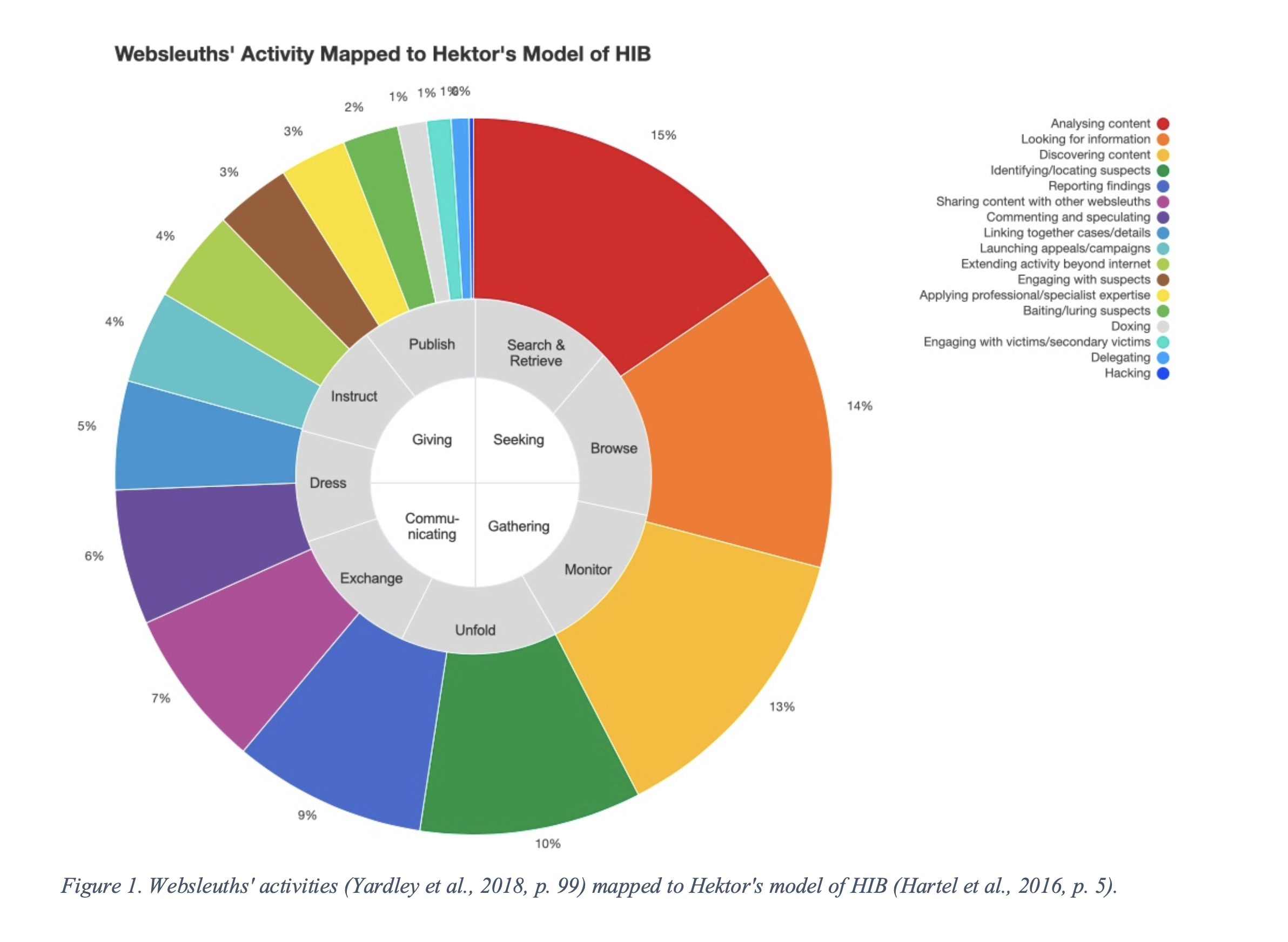
Figure 1. Applying Hektor’s Model to the Websleuths Information Community
This visualization, created by a former INFO 200 student, maps the activities of web sleuths onto Hektor’s eight information activities. The model provides a clear analytical framework for synthesizing how this community searches, monitors, exchanges, organizes, and publishes information in collaborative online spaces. (Source: Yardley, E., Lynes, A. G. T, Wilson, D., & Kelly, E. (2018). What’s the deal with ‘websleuthing’? News media representations of amateur detectives in networked spaces. Crime Media Culture, 14(1), 81-109. https://doi.org/10.1177/1741659016674045)