In this module we will explore more information behavior theories. We will also look at how theories and models are used to understand various information communities. Some information behavior theories explain the various stages of the search process, while those like Everyday Life Information Seeking (ELIS) frame information needs within the context of the human experience. Others typify the experience of those immersed in leisure pursuits. We will explore various information behavior studies on specific groups to see the models and theories put into practice
Module 4 Lecture:
- Lecture: Web Version
- Slides: Download Community-Generated Information Sources here
- Video File: Download Video Podcast
- Audio File: Download Audio Podcast
Module 4 Readings
Things to Read:
- “Radical Change Theory” (Dresang & Koh)
- “Information Activity in Serious Leisure” (Hartel et al.)
- “Everyday Life Information Seeking” (Savolainen)
- “Information Poverty & Disability” (Gibson & Martin)
Things to View:
Things to Explore:
- “Information Needs of Canadian Midwives” (Barnes et al.)
- “Information Behavior of Music Directors” (Chandler)
- “Korean Immigrants’ Information Behavior” (Suh & Hsieh)
- “Fashion Bloggers Info Use” (Detterbeck et al.)
- “Intl. Students’ Info Seeking” (Sin)
- “Internet Use by Intl. Students” (Yoon & Kim)
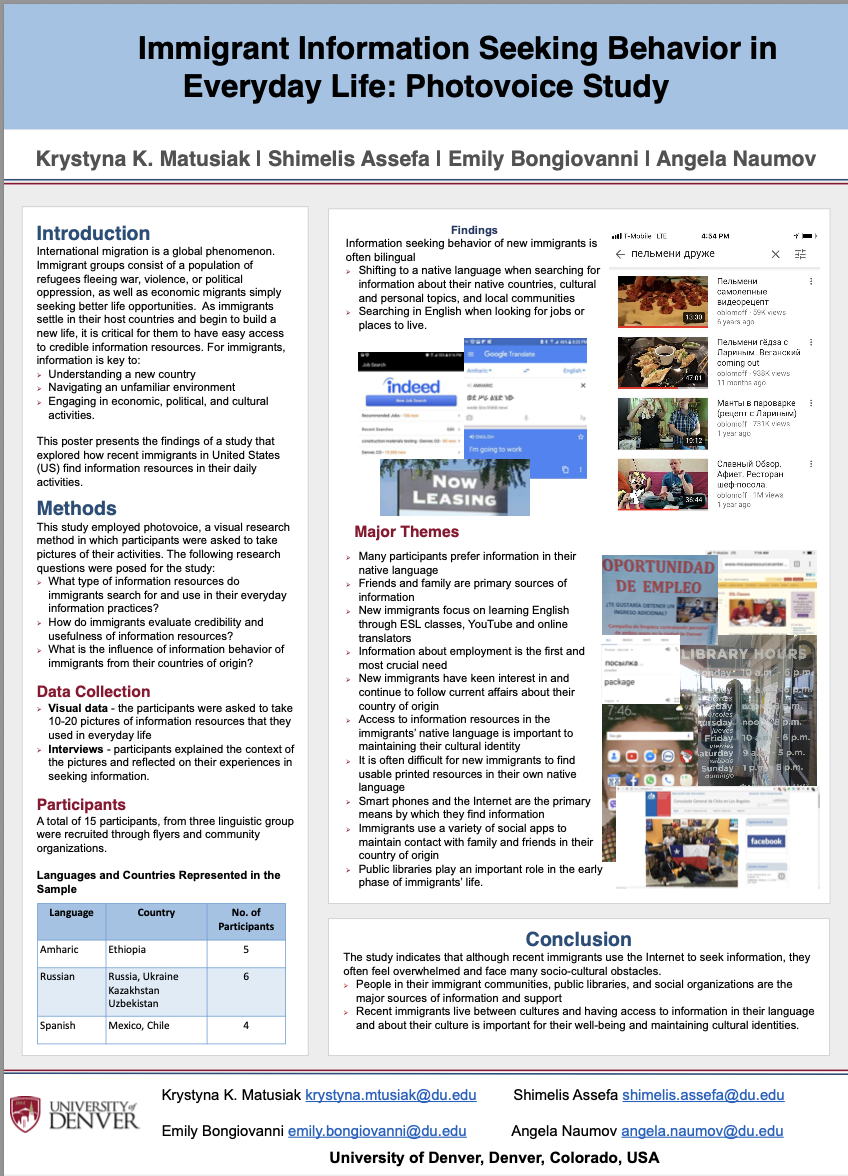
- “New Immigrants Info Behavior” (Assefa & Matusiak)
- “Info Encountering” (Erdelez)
See also: A complete list of Module 4’s readings
Next: Module 5: Information Communities and Diverse Information Needs